
Nearly all of the world’s international internet traffic rides on undersea fiber cables. Some estimates put it at 99%. Those lines stretch across oceans for millions of kilometers, silently moving data every second.
But cables don’t last forever. A trawler snag, a drifting anchor, or a major quake can damage a link. Meanwhile, AI, streaming video, and cloud services keep adding pressure on capacity.
That’s why long-distance cable networks maintenance is a 24/7 job. It combines real-time monitoring, fast repairs at sea, and careful protection before damage happens. Let’s look at how teams keep global connectivity stable, even when the ocean throws surprises.
How Teams Watch Over Cables 24/7
Long-distance cable networks maintenance starts with watching. Operators use monitoring systems that keep an eye on signal strength and error rates. If something shifts, alerts fire right away.
Inside the cable, the fiber can also act like a sensing tool. That matters because the ocean is never truly calm. Even small changes, like pressure from passing ships, can show up in the data.
As a scale reference, the global network spans around 1.5 to 1.7 million kilometers of active submarine fiber. With that much cable, issues can pop up anywhere. So engineers don’t wait for complaints from customers.
They track the health of routes through dashboards and automated checks. Then they compare readings to “normal” patterns for that exact segment. If readings don’t match, a team investigates quickly, often within hours.
Many operators also rely on smart sensing approaches and subsea monitoring. For a closer look at how monitoring and fiber sensing work together, see digital monitoring and smart sensors for cable health.
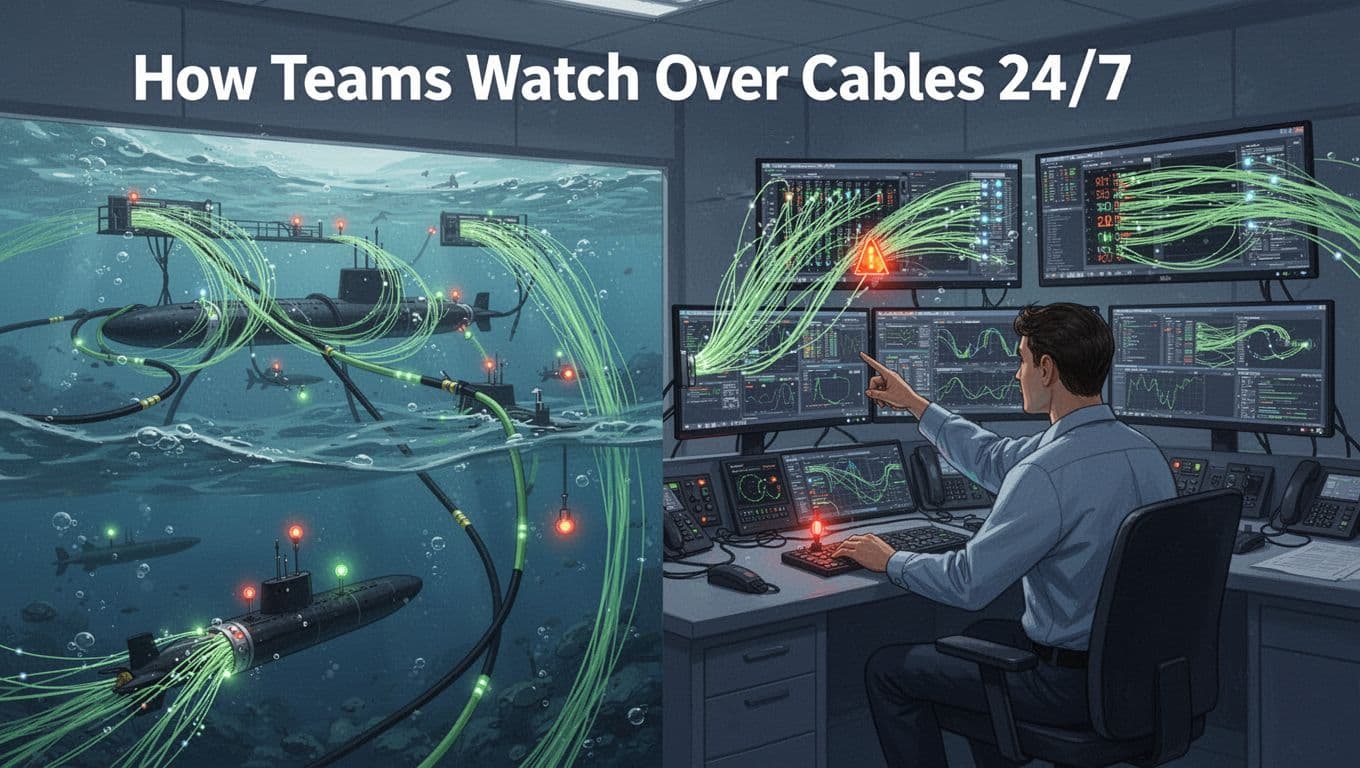
A good analogy is a home alarm. It doesn’t “fix” anything, but it spots trouble early. In this case, early detection helps reduce downtime across continents.
Sensors and Real-Time Alerts
Sensors help engineers spot faults without waiting for a full outage. Many monitoring setups look for changes in optical signals, loss patterns, and timing errors. Some systems also use distributed sensing ideas that “listen” along the fiber.
When an alert triggers, the goal is simple: narrow down the location. Teams use the cable’s behavior to estimate which segment likely has the issue. Then they dispatch the right repair resources.
Think of it like finding a loose thread. You can’t pull the entire sweater apart. So you find the knot, then you cut and rejoin only what you need.
Here’s what alerting systems often catch:
- Signal loss or spikes that don’t match routine traffic
- Noise changes that point to physical disturbance
- Performance drift that suggests slow damage
In addition, operators use underwater positioning and operational tools to speed up field work. If you want an example of how underwater operations can improve measurement and safety, see accurate underwater cable operations.
Advanced Fiber Sensing Tech
Some maintenance relies on advanced sensing. Instead of only checking signals at the ends, engineers use lasers and light pulses to read what’s happening along the fiber.
This can help detect pressure changes tied to events like earthquakes or nearby ship activity. It can also support early warnings for seabed disturbances. In other words, the system can act like a “line of microphones” stretched across an ocean floor.
The benefit is prevention and speed. When a team knows where to look, it can plan the repair faster and reduce search time. That matters when repair ships have to move across wide areas.
It also helps with risk management. If a region shows repeated disturbances, operators can increase monitoring intensity. They may also adjust routing decisions for future cable builds.
Of course, no sensing system can guarantee “nothing will break.” The ocean has too many variables. Still, better detection reduces uncertainty, and uncertainty often causes delays.
The Step-by-Step Process to Repair a Broken Cable
When a break happens, the response turns surgical. Teams follow a known workflow, but each event still feels high-stakes.
First, operators confirm the fault location. Then they contact repair partners. A repair ship has to get to the site, and time matters because network capacity can only absorb so much loss.
Repair ships are specialized. The global fleet is limited, with fewer than 100 dedicated cable-repair ships often cited across the industry. When one is available nearby, it becomes a race against the clock.
Then the ship sends robots and field gear to the seabed. Engineers find and retrieve the cut fiber ends. After that, they splice and test the repair section. Finally, they lower the updated cable back into the right position.
In many cases, repairs take days to weeks, depending on weather, permits, and route distance. Permits can slow things down across countries and jurisdictions. Also, a ship may need time for cable loading and splicing equipment setup.
For a plain-language description of what the repair workflow typically includes, see how undersea cables get repaired.
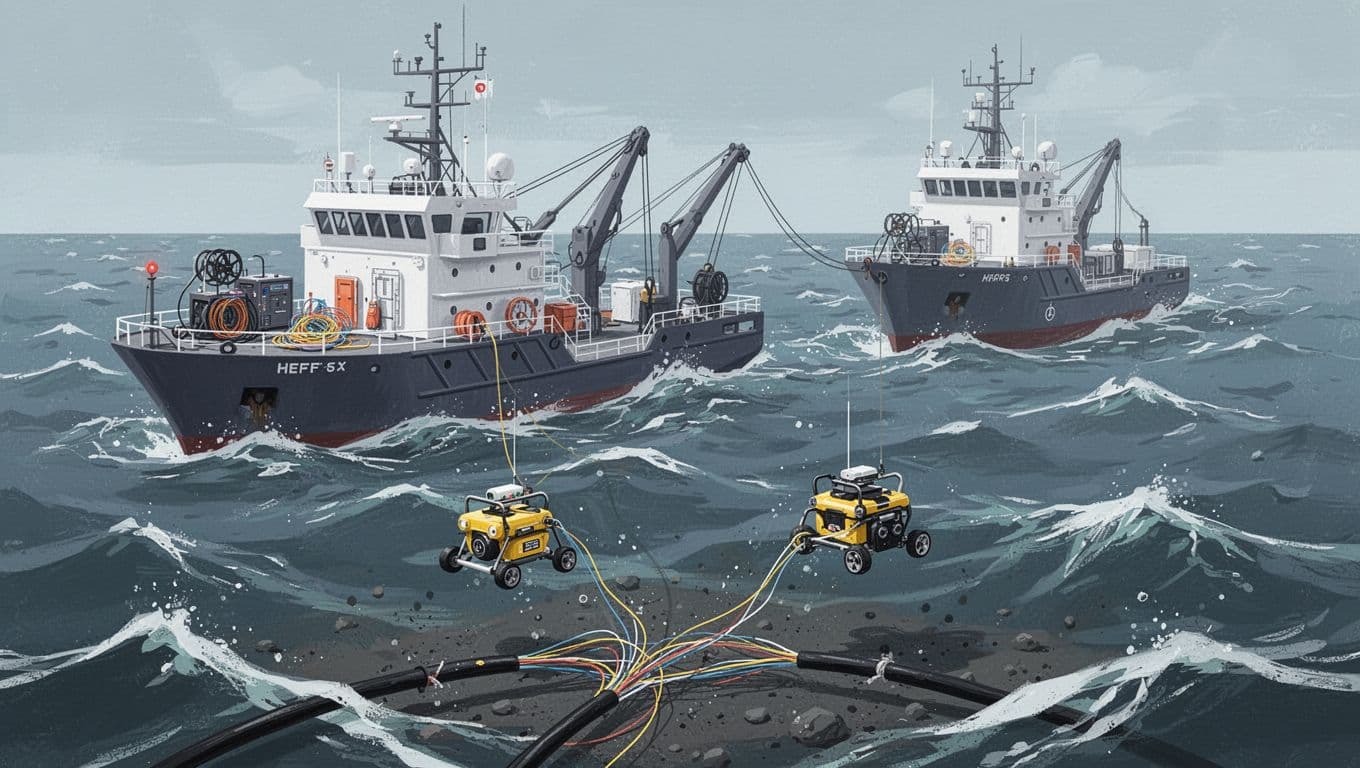
Even with strong planning, the ocean can add friction. But the steps below keep repairs consistent.
Deploying Repair Ships and Robots
Once a ship is dispatched, it mobilizes fast. Operators align the cable route plan, the seabed conditions, and the expected cable burial depth.
Next comes the robot step. Many teams use ROVs (remotely operated vehicles) to work on the seabed. The ROV can grab cable ends carefully, even when conditions make access difficult.
The key is precision. A cable end can sit under sediment or shift due to current. If the ROV pulls the wrong spot, it can worsen the damage.
Meanwhile, the ship’s crew prepares for splicing. They also stage tools for lifting, cutting, and joining fiber sections.
In some well-positioned regions, repair ships stand ready. For example, plans often include ships in operational hubs like Yokohama, Japan, because the region sits on major cable routes.
Splicing and Testing Back in Place
Splicing is the high-skill part. Engineers remove the damaged section and join the fibers using specialized splice equipment. The goal is low loss and stable long-term performance.
After splicing, they test the repaired segment. That includes checking signal quality, verifying link behavior, and confirming that performance matches requirements.
Then they lower the repaired cable back onto or into the seabed. If burial is needed, they may adjust the cable’s placement so it stays protected.
Finally, the repair team updates network systems. Operators watch the link again to confirm stability over time, not just in the first minutes.
A repair can be like rebuilding a bridge. You can’t test it with a quick glance. You verify strength, alignment, and safe operation.
Many networks also rely on backups and route redundancy. Still, repairs matter because backups can’t fully replace lost capacity forever.
Preventive Measures That Keep Cables Safe
Repairs are essential, but prevention reduces how often repairs are needed. Maintenance teams treat cable protection like risk insurance.
Many cables get buried in areas with higher risk. Burial can shield the line from fishing gear and accidental anchors. In other zones, operators use armored cable designs for extra resistance.
Route planning also plays a major role. Before a cable ever lands on the seabed, teams survey the route. They look at seabed stability, slopes, and areas prone to landslides. They also study human activity patterns, like shipping lanes and fishing grounds.
In addition, international guidance shapes how countries protect cables and manage activities near them. For instance, the International Cable Protection Committee (ICPC) best practices outline ways governments can improve continuity and protection.
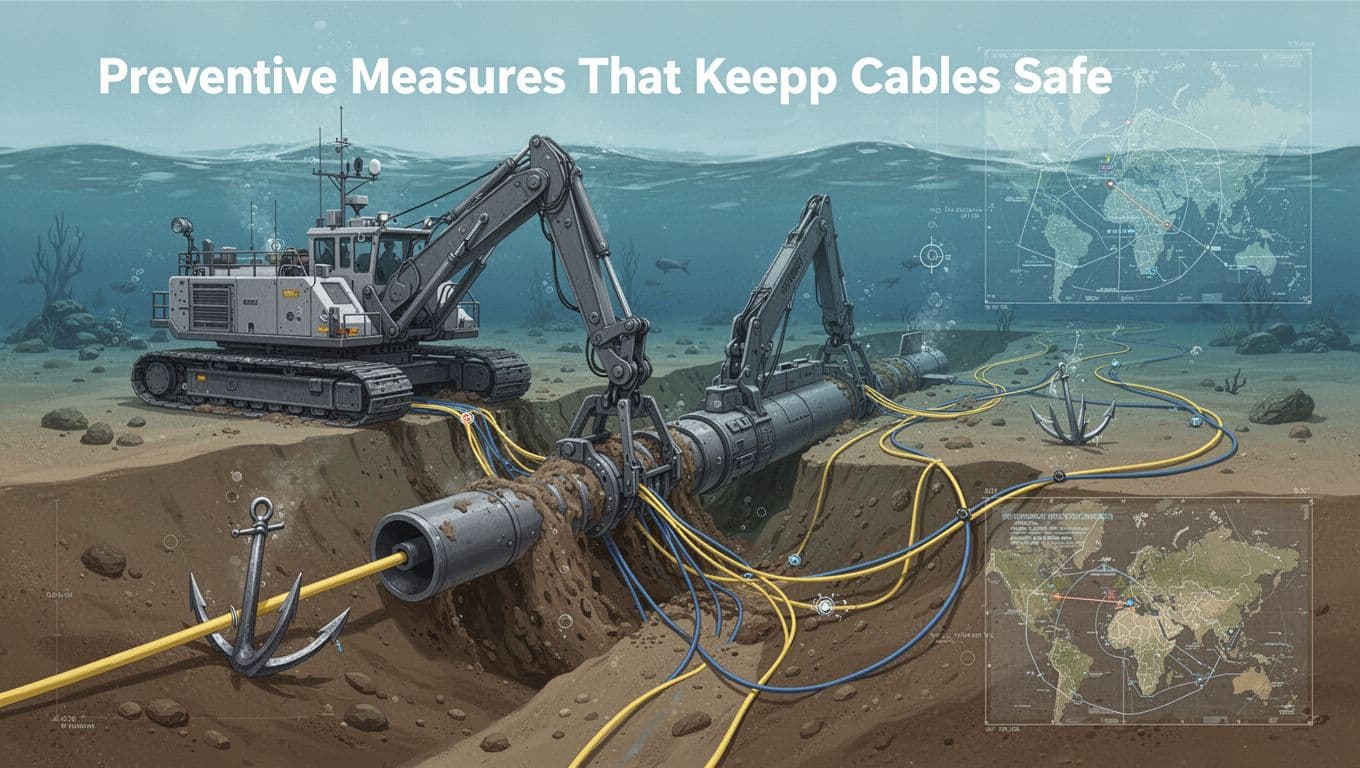
The big idea is simple: fewer surprises on the seabed lead to fewer urgent repairs.
Smart Route Planning and Burial
Smart route planning starts with desk studies and field surveys. Engineers map the seabed, check depth, and identify hazards like unstable sediments or fault zones.
If the route crosses risky areas, teams may adjust the path. They can reroute around unstable seabed or choose a deeper burial strategy.
Cable burial depth matters too. Too shallow, and gear can snag it. Too deep, and installation becomes harder and more costly. So teams pick a depth that fits the local conditions.
After burial, operators often monitor the route and performance. If the seabed changes over time, the system might show early signs through sensing and monitoring.
A key takeaway: good planning doesn’t eliminate risk. It reduces the chance that routine human activity becomes a cable outage.
When human impacts drop, maintenance becomes more predictable. That’s a win for networks and for customers.
Armor and Global Protection Rules
Even with burial, some areas need extra protection. Armor can help the cable resist abrasion, compression, and accidental impacts.
Operators also use protective designs around vulnerable spots like landing points. Those areas see more traffic from boats and shoreline operations.
Then there are rules and coordination. Many countries set limits near submarine cables for activities like anchoring and dredging. They also encourage reporting if cables get disturbed.
These rules matter because the ocean is shared. A cable route is often near fishing activity, shipping corridors, or offshore energy projects.
In practice, effective protection needs consistency. If one region allows risky behavior, damage can spread down the line. So governments and operators work through guidance and enforcement efforts.
The payoff is clear. When cables are better protected, fewer breaks come from human contact. Industry discussions often note that a large share of breaks connect back to fishing gear and anchors.
Key Challenges and Exciting New Developments
Maintenance isn’t just about tools. It’s also about constraints, timing, and real-world risk.
One pressure point is workload. The industry sees hundreds of disruptions each year, driven by storms, earthquakes, and human activity. Operators also face longer repair lead times because repair ships are limited.
Another challenge is aging infrastructure. Some long-distance cables have operated for decades. Many are around the 25-year mark, which means components have higher long-term stress.
Geopolitics adds more pressure too. Recent tensions around regions like the Red Sea have raised concerns about attacks and sabotage risks. Even when incidents are limited, fear can cause rerouting and supply chain friction.
Meanwhile, AI demand keeps growing. Recent estimates suggest capacity growth on the order of 40% each year as AI data traffic expands. That creates a tough math problem: more demand, plus the same ocean risks.
If you want a policy-level look at how redundancy, repair, and recovery planning connect, see redundancy and repair planning.
Common Break Causes and Repair Backlogs
Most breaks tie back to a mix of human and natural forces. Fishing gear and anchors account for a large share, often cited as over 50% in many breakdowns.
Natural causes include earthquakes, seabed movement, and storm-driven shifts. On top of that, long cables cross multiple jurisdictions. Permits and coordination can take time.
So do we see backlogs? Yes. Even when teams respond quickly, the repair ship may have to finish another job first. Weather also matters, especially in rough seasons.
Industry reporting often mentions repeated repairs in busy corridors. In some cases, you can see multiple fixes happen weekly across the world, which adds strain to schedules.
Meanwhile, repair capacity is constrained. New cables increase the network footprint, but the repair fleet doesn’t expand at the same speed. That gap turns minor damage into major downtime risks.
2026 Innovations for Better Reliability
The good news is that maintenance is improving. Newer sensing and monitoring can shorten the time from detection to pinpointing. In addition, AI-driven analysis helps interpret alarms and reduce false leads.
Some cable builds also incorporate improved designs. Better armoring and burial practices can reduce the odds of damage in high-risk areas.
Robots and field equipment are also advancing. Faster ROV deployment and improved seabed handling help teams move from “we found a problem” to “we fixed it” sooner.
There’s also more focus on capacity planning. Operators push for smarter routing and stronger redundancy. The goal is simple: even if one segment fails, traffic should shift smoothly.
Finally, more cable projects and diversification plans can reduce single-region dependency. For example, U.S. and Japan efforts to diversify supply chains have gained attention, especially as geopolitical risks shift.
A cable network won’t become “risk-free.” Still, maintenance keeps getting better, and upgrades help networks withstand the next outage.
Conclusion
The hook was simple: long-distance undersea cables carry nearly all international data. That kind of reliance means maintenance can’t wait.
Teams keep cables running through 24/7 monitoring, then move into fast repair mode if signals change. When they can, they prevent damage with burial, armor, and protection rules that limit risky activity near routes.
Even with aging infrastructure and real-world hazards, the trend is toward faster detection and smarter repairs. AI demand also pushes operators to plan better for recovery, not just growth.
If you use the internet daily, you’re already benefiting from this work. Consider sharing this post with someone who wonders how outages get fixed, or look for updates the next time a repair news story hits.